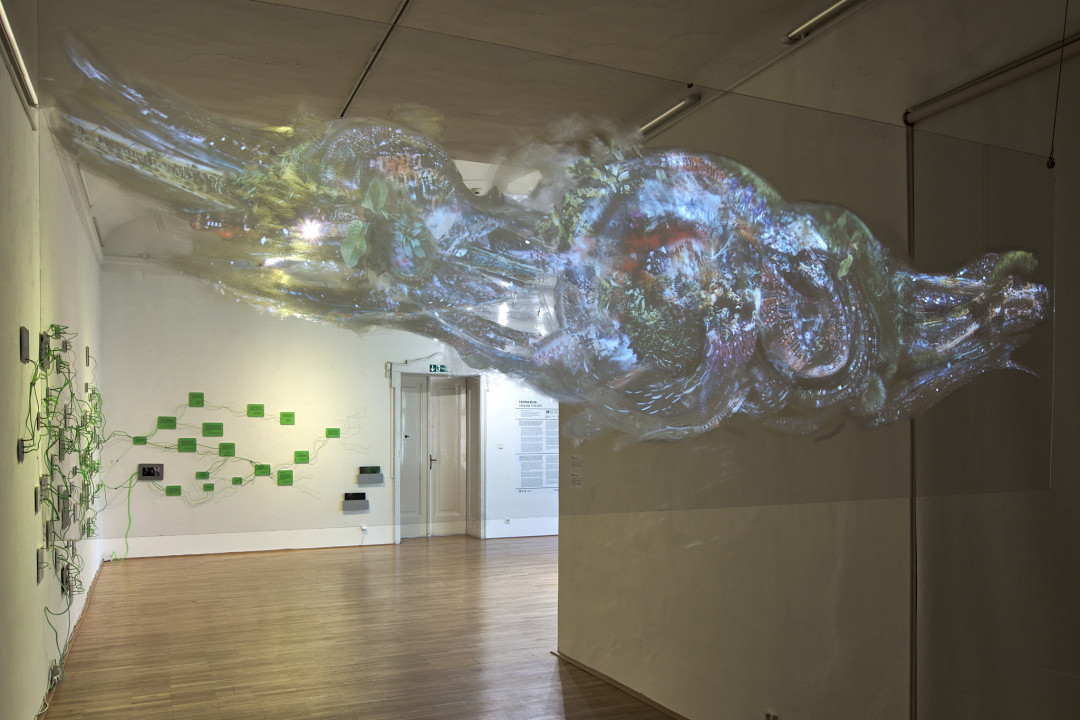
Ants, bees, birds, and other creatures that live in communities teach us how to tackle the world’s complex problems. We might think that ants know why they are going somewhere, that they follow a plan they are aware of. But this is not the case: when we observe a single ant, we see that it is helpless and clumsy on its own. Ants are not clever, but their colonies are. Colonies react quickly and efficiently, solving problems that would be insurmountable for an individual. They act based on the intelligence of the collective.
Where does this wisdom come from? How do the actions of individuals contribute to the behavior of the colony as a whole? How do hundreds of bees reach a crucial decision, even when many of them disagree? The collective abilities of creatures—none of which understands what the group is doing, yet each contributing to the success of the whole—seem almost miraculous. No one leads an ant colony. They have no ruler. Their behavior follows simple rules: each member acts based on immediate local information, yet none of them understands the entire situation.
The functioning of the community relies on countless interactions between individual ants, governed by simple rules. Scientists describe this system as self-organizing. When it comes to task distribution, an ant colony “calculates” every morning how many members will go out to forage, depending on the current situation.
This model has inspired many fields. Transportation companies, for example, employ artificial intelligence based on algorithms mimicking the way ants search for food. Investors on the stock market and gamblers at horse races also use collective judgment—through mechanisms like voting, auctions, and averaging.
Even when bees in a swarm often have different opinions about the best place to build a new nest, they typically choose the best option as a group. A decision is made once they gather enough information, carry out independent evaluations, and then vote. A school of minnows, for example, follows simple rules: pay attention to your neighbors, avoid collisions, stay together, and swim in the same direction. This is another form of collective intelligence—one based on coordinated movement. Such behavior has inspired self-organizing models in robotics as well, where group coordination is decentralized and does not depend on a leader. Wikipedia, too, operates on the principle of self-organization.
In nature, creatures often move in large groups. This increases each individual’s chances of avoiding predators, finding food or a mate, or following a migration route. When a predator attacks a school of fish, the group disperses into formations that make it nearly impossible to single out an individual. Yet large groups tend to be “wise” only when individuals act independently and responsibly. Each member must contribute with their own input.
Through this exhibition, we will explore how we can draw inspiration from these abilities. The question remains, however, why it does not work in quite the same way among humans, and what role individual willpower plays here. The inspiration for this exhibition was Peter Miller’s article Swarm Theory in National Geographic [1].
[1] Peter Miller, Swarm Theory, National Geographic, vol. 2007, no. 7, 2007, pp. 104–125.