Everyone is welcome here. Regardless of age, race, religion, gender, ethnicity, social or economic background, or physical or mental ability, everyone belongs. Art is for everyone.

Everyone is welcome here. Regardless of age, race, religion, gender, ethnicity, social or economic background, or physical or mental ability, everyone belongs. Art is for everyone.
The proposed concept is primarily based on a number of selected terms which, in my view, can currently be considered key to the future direction of the Ján Koniarik Gallery (hereinafter referred to as GJK), as well as to the development of 21st-century galleries in general.
Although proposing standards may seem insufficiently ambitious for a 21st-century institution, I consider the principle of standardisation to be fundamental. It should primarily involve the development, professionalisation and strengthening of the competencies of the gallery’s staff. Expanding and further specialising the professional team could lead to a higher level of expertise and professional preparedness, thereby improving the quality of exhibition and publishing activities through a stronger focus on individual professional programmes.
The internal organisational structure should enable a clearer definition of individual responsibilities and competencies, including those required by contemporary gallery practices (such as mediation positions, project management, and other specialised roles).
As part of staff development, the gallery’s management model should also be innovated in accordance with contemporary forms of collective and participatory leadership. While the director remains the statutory representative of the institution, holding decision-making authority and responsibility, the gallery’s programme can simultaneously emerge from teamwork and discussion, bringing a wider range of perspectives and ideas beyond the possibilities of an individual approach. The selection and articulation of professional programmes by individual members of the team can subsequently contribute to strengthening expertise in specific fields.
This approach represents standardisation in the sense that such models have become common practice in many contemporary galleries.
It is also essential to standardise organisational procedures related to the creation of exhibitions. For this purpose, an internal process manual should be developed, providing a framework for the preparation and implementation of individual projects. Establishing consistent organisational principles would be beneficial both for internal institutional functioning and for external communication. Through clearly defined timelines, advance announcements and systematic information-sharing, the gallery’s activities could achieve a greater impact on potential visitors, collaborators and exhibiting artists.
In this context, standardisation should also be implemented in the field of communication. This applies not only to external communication, including marketing and promotion, which should become more consistent, formally and conceptually unified, and improved in accordance with current trends, but also to internal communication within the institution and the wider artistic community.
The result of such standardisation should be the timely preparation of the gallery’s programme for upcoming periods, supported by a clear and balanced schedule. This would enable more effective allocation of specific tasks, including responsibilities connected with external communication.
Beyond the people and processes that constitute the gallery, its buildings themselves should urgently undergo a process of standardisation. Although this concept considers material infrastructure to be secondary, three areas remain essential for the functioning of a cultural and memory institution: suitable working conditions for employees, positive visual representation for visitors, and appropriate conditions ensuring the optimal preservation and presentation of artworks.
At the same time, particularly the Koppel Villa building should undergo architectural interventions which, although they may be considered less extensive or even cosmetic, are nevertheless crucial for ensuring that the gallery presents itself as a visually engaging and contemporary institution.
In this regard, the gallery should, in my view, strive to become a “good partner”. Partnership with other institutions — not only cultural ones — should be considered a fundamental principle in the functioning of a cultural organisation, particularly at the level of the city and region, where institutions often share target audiences, themes and activities.
Through mutual cooperation and communication, even seemingly simple issues such as overlapping events and the coordination of activities can be addressed. However, such collaboration can extend much further, towards the development of large-scale and long-term projects focused on social and cultural policies.
Partnership can therefore also be understood as the establishment of intensive collaborations with other institutions. The most natural partners are the other cultural organisations operating within the city, such as Zaži v Trnave – Mestské kultúrne stredisko, and within the region, including Divadlo Jána Palárika, Západoslovenské múzeum, and Knižnica Juraja Fándlyho, as well as independent cultural organisations such as Malý Berlín, which frequently approach culture through interdisciplinary perspectives and explore overlaps between different artistic disciplines.
Interdisciplinary cooperation across various fields of artistic practice provides an opportunity to systematically reach broader audiences and, through alternative approaches, engage visitors who might otherwise maintain a distance from visual art.
I understand effective partnership in another important sense as well. Various organisations encounter questions related to the history and theory of art and architecture, and the gallery can become a valuable partner in this regard by offering its knowledge, expertise and professional competencies. This role is not limited only to cultural organisations. As the founding authority of GJK, the Trnava Self-Governing Region can also recognise the gallery’s potential as a strong partner capable of contributing to various future initiatives.
Well-considered partnerships can also support the development of exhibition dramaturgy. Therefore, it is worth considering a long-term collaboration with another gallery institution, potentially creating an exchange programme. Another form of meaningful partnership could be cooperation with a significant Slovak or international art award, for which JKG could provide exhibition space for regular presentations. Such cooperation could allow some of the costs associated with preparing larger exhibition projects to be covered through external resources.
Educational institutions could also play a key role in partnership development. Cooperation with the Department of Art History and Theory and the Department of Art Education at Trnavská univerzita v Trnave, both professionally engaged in research and the popularisation of visual art, could contribute on the one hand to the preparation of various educational and public programmes, while on the other hand allowing the gallery to support the development of future professionals in the field.
I consider the concept of “openness” to be the most important principle in the future development of the gallery, particularly in terms of accessibility for the public and an orientation towards social policies.
A 21st-century gallery is a place of inclusion and openness. A cultural institution should therefore strive to create inclusive programmes that do not transform art into an elitist product inaccessible to wider society, but instead make it available to everyone, including socially excluded groups and those who have previously been unable to engage with art for various reasons.
Among the most important areas of development should be programmes aimed at children, with an emphasis on the possibilities of gallery education; senior audiences, through opportunities for lifelong learning in the field of art history; and people with disabilities, including, for example, blind and visually impaired visitors, for whom only a limited number of visual art projects currently exist.
Attention should also be given to people facing financial or social barriers to experiencing art, as well as to the wider public who have remained disconnected from art for various reasons, particularly due to existing prejudices towards it.
The goal of the gallery should be to cultivate a responsible community that is not closed, but continuously offers and receives. In this regard, the introduction of appropriate forms of artistic practice, such as participatory art or contemporary project-based approaches that place social issues at the centre of their interest, can play an important role.
At the same time, a positive step may also be a renewed engagement with more traditional artistic media, as well as street art and public art, which can serve as effective bridges towards the gallery, particularly for more conservative audiences.
A suitable development strategy would be to identify and establish a dedicated space primarily intended for projects focused on social engagement and community-oriented practices. At the same time, principles of accessibility and openness should become an integral part of all areas of the gallery’s work.
Openness also includes creating opportunities for emerging artistic practices and newly established authors, who could significantly expand the gallery’s programme with the most contemporary approaches.
Both buildings of GJK and their exhibition spaces have their own specific characteristics, limitations and advantages when it comes to the installation and presentation of artworks. They differ in terms of atmosphere, spatial qualities and scale.
Therefore, an appropriate step towards systematising approaches to individual gallery spaces and their exhibition programmes would be the development of a site-specific programme for each location. Each space should have its own thematic focus, preferred media approaches, scheduling principles and overall operational framework.
These content-based and formal guidelines do not necessarily need to be permanent; they may be revised and adapted at annual or multi-year intervals according to the evolving needs of the institution and its audiences.
An important aspect of any change in institutional leadership is the preservation of continuity and the continuation of established good practice. In this regard, I believe it is essential to maintain the key projects that have shaped the existing dramaturgy of GJK, particularly the Trienále plagátu Trnava and the Skúter, akcia mladého umenia.
Another important principle should be ensuring the inclusion of significant international projects within GJK’s programme at least once a year, while also maintaining space for themes and artists connected to the Trnava region.
An essential characteristic of the gallery’s development concept should be its flexibility and openness. It should be capable of responding to current social challenges and continuously incorporating feedback.
The concept should be understood as a matter of collective responsibility and therefore not as a fixed or unchangeable document defined solely by the gallery’s management. With this intention, the institution should introduce annual evaluations of its activities beyond the formal annual report and establish regular open discussions both within the gallery and with external audiences and partners.
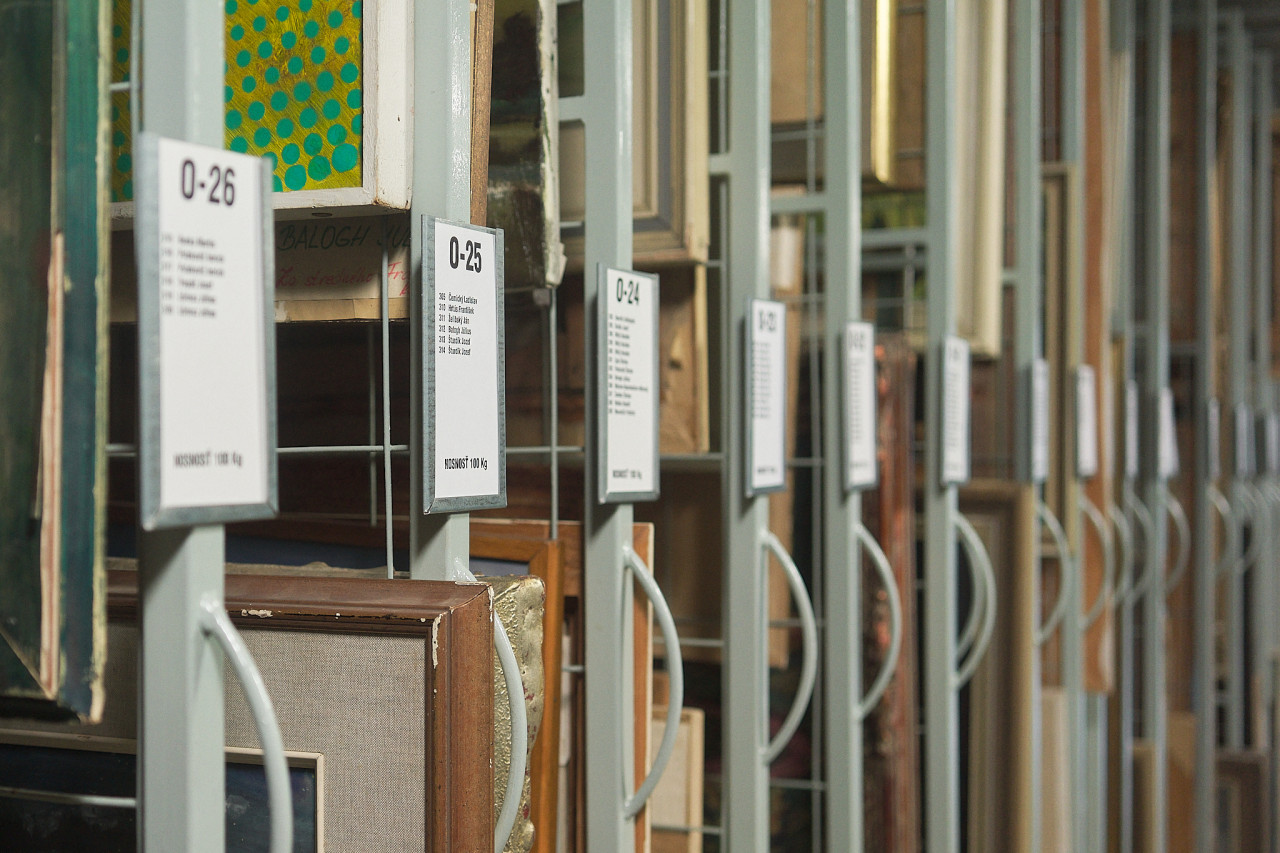
A separate subject of ongoing self-reflection should be the GJK collection itself, which requires comprehensive professional evaluation in order to determine its potential for future use in exhibition projects at GJK as well as in collaborations with other galleries.
Adrián Kobetič
The Ján Koniarek Gallery in Trnava focuses primarily on the research and presentation of modern and contemporary Slovak art of the 20th and 21st centuries within a broader Central European context.
Acquisition Policy of the Ján Koniarek Gallery in Trnava
The Acquisition Policy of the Ján Koniarek Gallery in Trnava (hereinafter referred to as the "Gallery") is established for a five-year period. The Director of the Gallery submits the proposed policy to the Acquisition Committee for approval. The members of the Committee are likewise appointed by the Director of the Gallery.
The Acquisition Committee consists of five members:
one member of the Gallery staff;
one representative of the Trnava Self-Governing Region;
one representative of a regional gallery in Slovakia;
one expert in the field of art criticism;
one established visual artist.
Each year, in August, the Committee approves acquisitions for the following calendar year. Its decisions are based on the current Acquisition Policy and supporting documentation provided by the Director of the Gallery, including information on the Gallery's financial resources and opportunities to secure funding through grant schemes.
The principal objective of the Acquisition Policy for the period 2024–2029 is the systematic expansion of the Gallery's collections through acquisitions of works by emerging and mid-career Slovak artists. Particular emphasis will be placed on audiovisual works and new media, which have historically been only marginally represented in the Gallery's acquisitions.
Priority will be given to works that build upon the Gallery's recent exhibition and research projects. Acquisitions should reflect the key social, cultural, and intellectual challenges of the twenty-first century, including:
social stability;
environmental issues;
human rights;
geopolitics;
institutional questions concerning artistic practice and cultural production;
technological development and its societal implications;
postcolonial and feminist perspectives;
material-based research;
the crisis of the Anthropocene;
and related contemporary themes.
Preference will be given to works created after the year 2000. In exceptional circumstances, including particularly significant opportunities or offers of donations, the Acquisition Committee may also consider the acquisition of older works or works in other media.
Proposals for acquisitions may be submitted by the Director of the Gallery as well as by any member of the Acquisition Committee.
Adrián Kobetič