The present concept is built around several selected concepts that, in my view, are currently key not only for the future direction of the Ján Koniarek Gallery (hereafter referred to as GJK) but also for the identity of a 21st-century gallery in general.
Standardisation
Although it may seem that proposing standards is a modest ambition for a 21st-century institution, I believe standardisation should be a priority. This includes the development, professionalisation, and clarification of staff competences. Expanding and specialising the gallery’s professional team could bring a higher level of expertise, and through focusing on individual curatorial programmes, it could also raise the overall quality of exhibitions and publishing activities.
The organisational structure should clearly define individual roles and competencies, including positions aligned with contemporary gallery approaches (such as mediators’ positions, project managers, etc.). Personnel development should also involve innovation in the gallery's management, corresponding with new models of collective and participatory leadership, where the director remains the statutory authority with final responsibility, however programming can emerge through team collaboration and dialogue, fostering broader perspectives and ideas beyond the limits of individual thought. Selection and articulation of individual staff members’ professional programmes can significantly contribute to increasing institutional expertise. This form of standardisation is common practice in many other galleries.
It is equally essential to standardise organisational procedures related to exhibition-making. An internal process manual should be created to guide each project’s development. Having established principles not only streamlines internal operations but also enhances external communication. With clear timelines, transparent planning, and structured information-sharing, the gallery’s activities can have greater impact on potential visitors, collaborators, and exhibiting artists.
Standardisation should also be reflected in communication – not only in terms of external communication such as marketing and promotion (which should become more coherent, contemporary, and strategic), but also internally within the institution and across the wider arts sector. A clearly defined programme, scheduled in advance with a balanced and realistic timetable, allows for improved planning of tasks – including those related to public communication.
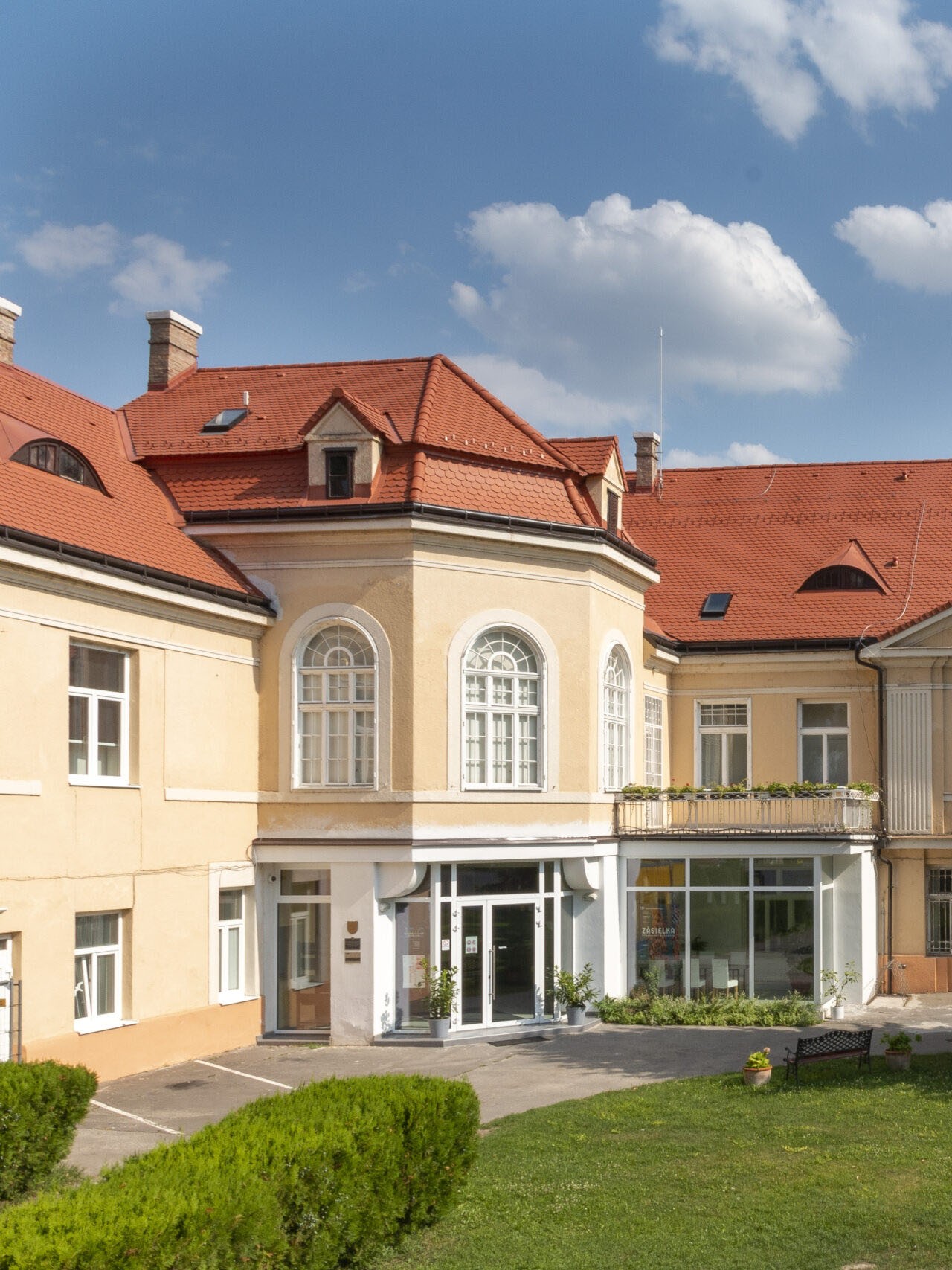
Beyond the people and processes that form the gallery, its physical buildings also urgently require standardisation. While material conditions may be considered secondary within this concept, appropriate working conditions for staff, a positive visual environment for visitors, and adequate preservation standards for artworks are essential for any cultural and memory-based institution. In particular, the Koppel’s Villa should undergo architectural interventions – perhaps not extensive, mainly cosmetic, but nevertheless essential – to improve its visual appeal and align it with the gallery’s contemporary identity.
Partnership
I believe that the gallery should strive to become a “good partner”. Partnership is crucial for any cultural institution – not only with other cultural entities but also across sectors, especially within the city and regional context, where audiences, topics, and activities often overlap.
Through cooperation and communication, even basic logistical issues like overlapping and coordinating of activities can be resolved, and more ambitious, strong long-term projects targeting cultural and social policy can be developed.
Strong partnerships might include collaborations with local institutions such as Experience Trnava (Zaži Trnavu) - the city cultural centre, regional organisations like the Ján Palárik Theatre, the West Slovak Museum, or the Juraj Fándly Library, as well as independent organisations such as Little Berlin (Malý Berlín), which understand culture interdisciplinary and often work across disciplines and artistic genres. Interdisciplinary collaboration offers a chance to reach wider and more diverse audiences, including those who might otherwise feel distanced from visual art. In this context, I also perceive a good partnership from another perspective. Various organisations frequently need support in art and architecture history or theory, and the gallery is well-placed to offer such expertise. This applies not only to cultural institutions but also to Trnava Self-Governing Region, GJK’s founding authority, which can benefit from such partnerships in future challenges.
A good partner, however, can also be a resource. Organisations frequently need support in art and architecture history or theory, and the gallery is well-placed to offer such expertise. This applies not only to cultural institutions but also to Trnava Self-Governing Region, GJK’s founding authority, which can benefit from such partnerships in future challenges. Strategic partnerships can also help shape the gallery’s exhibition programming. Collaborating long-term with another gallery could facilitate exchange exhibitions. Likewise, partnering with a major national or international art prize, where GJK could function as a platform for recurring presentations, with costs offset by external sources.
Educational institutions should also play a key role. Cooperation with the Department of Art History and Theory and the Department of Art Education at Trnava University – both involved in research and outreach of visual arts – could enrich the gallery’s public programmes, while also supporting the development of future professionals in the arts sector.
Permeability
Perhaps the most important concept for the gallery’s development is that of permeability – especially in terms of public accessibility and a commitment to social inclusion. The 21st-century gallery is an open, inclusive space. It must work actively to prevent art from becoming a privileged or exclusive commodity and instead make it accessible to everyone – including marginalised or previously excluded communities.
Crucial to this is developing programmes aimed at children through gallery education with the focus on gallery’s options within the area of art education in gallery settings, lifelong learning opportunities for seniors within history of arts, and inclusive projects for people with disabilities – for instance, blind and visually impaired visitors, who remain underserved in the field of visual arts. The gallery should also engage audiences on the financial or social margins of cultural life, as well as the broader public who may avoid art due to prejudice or lack of exposure.
The gallery should aim to foster a responsible yet open community – one that offers and receives. In this regard, bringing in appropriate types of art — such as participatory art or entirely contemporary, emerging forms of projects that place social policies at the centre of their focus — can be helpful. On the other hand, taking a step towards more classical media, or towards street art and art in public spaces, can also be a positive move, especially as these forms can serve as a useful bridge to the gallery for more conservative visitors. A suitable step in this direction would be the identification of a space primarily designated for the allocation of social policy-related projects. At the same time, however, such policies should be applied across all areas of gallery work. Part of this permeability also involves opening up programmes to emerging artistic voices, which could meaningfully enrich the gallery’s programme with the most contemporary approaches.
Site-Specific Programming
Both GJK buildings have unique characteristics, spatial constraints, and exhibition potential. Their differing layouts and atmospheres suggest that defining site-specific programmes for each would help systematise their use. Each venue could thus have a thematic focus, preferred media approaches, scheduling rhythm, and operational system. These frameworks need not be permanent; they can evolve annually or over multi-year periods.
Continuity of Good Practice
A crucial element during any leadership change is maintaining continuity in successful programming. I believe it is essential to continue core projects within the GJK’s existing dramaturgy – such as the Triennial of Poster Trnava and Skúter, the young art biennial. Further, the gallery should aim to feature large-scale international projects at least once a year and remain committed to topics and artists with links to the Trnava region.
Self-Reflection
The development concept must remain fluid and receptive. It should be responsive to societal changes and committed to ongoing feedback. It should function as a collective document rather than a rigid managerial directive. To this end, the gallery should engage in annual evaluations beyond the final report and organise regular open discussions – both internally and with the public.
Self-reflection should also extend to GJK’s collection, which deserves comprehensive scholarly evaluation to determine its future potential for in-house and external exhibition use.
Adrián Kobetič